


The best time to book beach rentals is three to six months ahead for peak summer weeks, with lodging selection widest from January through March for June through August travel. Shoulder months like May, September, and October allow closer-in booking without major sacrifice. The trade-off is simple: book early for choice of property, or wait and risk settling for whatever is left.
TL;DR:
- Families seeking larger spring break rentals should search from September through November; Independence Day and festival weeks warrant reservations by late winter or early spring.
- Homes with four or more bedrooms are best booked six to nine months ahead; beachfront, pet friendly, or exact location requirements further narrow choices.
- Last minute price cuts rarely apply to full peak season weeks; discounts tend to appear on isolated gap nights or during shoulder season instead.
- Domestic airfare is often cheapest one to two months before departure, so secure scarce lodging first and time flights around fare trends.
- When preferred dates are sold out, check cancellation inventory regularly and ask owners about refundable holds, which can preserve dates while rates change.
Table of Contents
- Season-by-season booking windows for beach vacations
- How lead time affects your choice between selection and price
- How holiday weeks and local events change the booking calendar
- Matching your group size and property type to the right timing
- Tactics that save money without losing your preferred dates
- How Emerald Coast By Owner fits into your booking timeline
- A simple checklist for deciding when to book
- Start your search on a direct-owner marketplace
- FAQ
- Sources
Season-by-season booking windows for beach vacations
Each part of the beach season has its own rhythm, and that rhythm decides how far ahead you need to act. Spring break behaves like a holiday week in warm-water destinations: families chasing oceanfront condos or larger homes should search the prior fall, from September through November, before school calendars lock in demand. Early summer, covering May and June, rewards travelers who start browsing between January and March, which is when property managers see the first wave of serious bookings for prime weeks.
Peak July weeks are the tightest window of the year. Aim to have your dates confirmed by early spring, because these weeks rarely see meaningful discounts once June arrives. Late summer and the shoulder months that follow open things up again.
- Spring break (family-sized units): book in the prior fall, September through November.
- Early summer (May and June): start searching January through March.
- Peak July and August: lock in by early spring; little room for discounts later.
- Late summer and shoulder months (August through October): more flexibility, and waiting can pay off.
- Winter escapes in far southern destinations: book earlier, since many snowbird weeks fill months in advance.
Winter is its own category. Snowbird season in the far southern Gulf fills up well ahead of the actual travel dates, so treat those weeks with the same urgency as peak summer.
How lead time affects your choice between selection and price
Property managers watch booking pace closely, and the patterns they track translate into useful rules for travelers. For June through August travel, booking three to six months ahead keeps the widest range of properties on the table, according to booking-curve analysis compiled from property manager data. Waiting until 60 to 90 days out can still work, but you take on real selection risk, especially for oceanfront or larger homes.
- 3 to 6 months out: broadest selection for June, July, and August weeks.
- Booking two to three months in advance can work for flexible travelers but carries some risk for specific property types.
- Inside one month: mostly leftover inventory, full-week discounts on prime listings are rare.
Expecting a last-minute discount on a prime beach week is usually wishful thinking. Dynamic pricing and tight inventory management mean reductions typically show up only for narrow gap nights or during shoulder season, not for a full week at a sought-after address.
Flights behave differently than lodging. Domestic airfare tends to price best about one to two months before departure, so when the rental itself is the scarce resource, book that first and let flight timing follow.

How holiday weeks and local events change the booking calendar
Certain weeks sell out faster than the rest of the calendar, and treating them like ordinary weeks is the most common planning mistake.
- Independence Day week and popular festival weeks often book earliest; aim to have reservations in place by late winter or early spring.
- Spring break functions like a holiday in warm-water markets, so plan around the prior fall rather than waiting until January.
- If your dates are already sold out at a property you want, watch for cancellation inventory and ask owners about refundable holds, which sometimes open a door that looked closed.
Local festivals and events compress demand into a handful of days, which pushes prices up and shortens the window during which rooms stay available. The safer move is to check event calendars for your destination before you assume a date is ordinary.
Matching your group size and property type to the right timing
Not every booking needs the same lead time. A couple chasing a flexible week has far more room to wait than a family that needs a specific floor plan.
- Large homes with four or more bedrooms: prioritize booking six to nine months out when you can, since supply is naturally smaller.
- Oceanfront or an exact location requirement: needs more lead time than a generic property a few blocks back.
- Pet-friendly units or other specific amenities: thinner inventory means starting earlier or keeping your travel dates flexible.
Pro Tip: If you’re set on a specific amenity like pet-friendly or beachfront, search by amenity first and let location flex, rather than picking a town and hoping the right property is still open.
Tactics that save money without losing your preferred dates
Some weeks genuinely reward patience, and knowing which ones lets you wait with confidence instead of guessing.
- Shoulder-season weeks in May and September through October often see price drops as the date approaches.
- Check cancellation inventory on a regular schedule rather than once, since open dates can reappear with little warning.
- Ask about refundable holds when a property offers them, which lets you lock a date while still watching for a better rate.
- Book lodging before flights whenever the rental is the limiting factor; align flight timing with fare trends otherwise, since domestic fares often price best about one to two months before departure.
Pro Tip: Set a recurring reminder to check your top property’s calendar once a week during the two months before your target dates. That’s when cancellations tend to surface.
For general deal-hunting habits that apply beyond beach trips, a short stay booking checklist covers timing tactics worth keeping in your back pocket.
How Emerald Coast By Owner fits into your booking timeline
We launched Emerald Coast By Owner in November 2016 with a straightforward goal: connect travelers directly with Gulf Coast property owners, no traveler fees attached. What began as 350 listings has grown into a marketplace covering thousands of vacation rentals from the Florida panhandle through Louisiana and Texas.
Because every listing connects you straight to the owner, you can ask directly about availability windows, upcoming cancellations, or flexible hold options. Our destination pages and current deals give you a practical starting point whether you’re booking six months out or watching for a late opening.

A simple checklist for deciding when to book
Here’s the decision rule we’d hand a friend: watch your target dates, decide your must-haves, then lock in once those must-haves show signs of filling. For a family trip needing oceanfront or a large home, book by the three to six month mark. For a flexible couples trip during shoulder season, wait and watch. Before locking anything in, our pre-booking checklist covers the questions worth asking any owner.
— Joe
Start your search on a direct-owner marketplace
We built Emerald Coast By Owner around one idea: book directly from the property owner and skip the traveler fees that pad so many other platforms. That means more of your budget goes toward the stay itself, not a service charge layered on top.
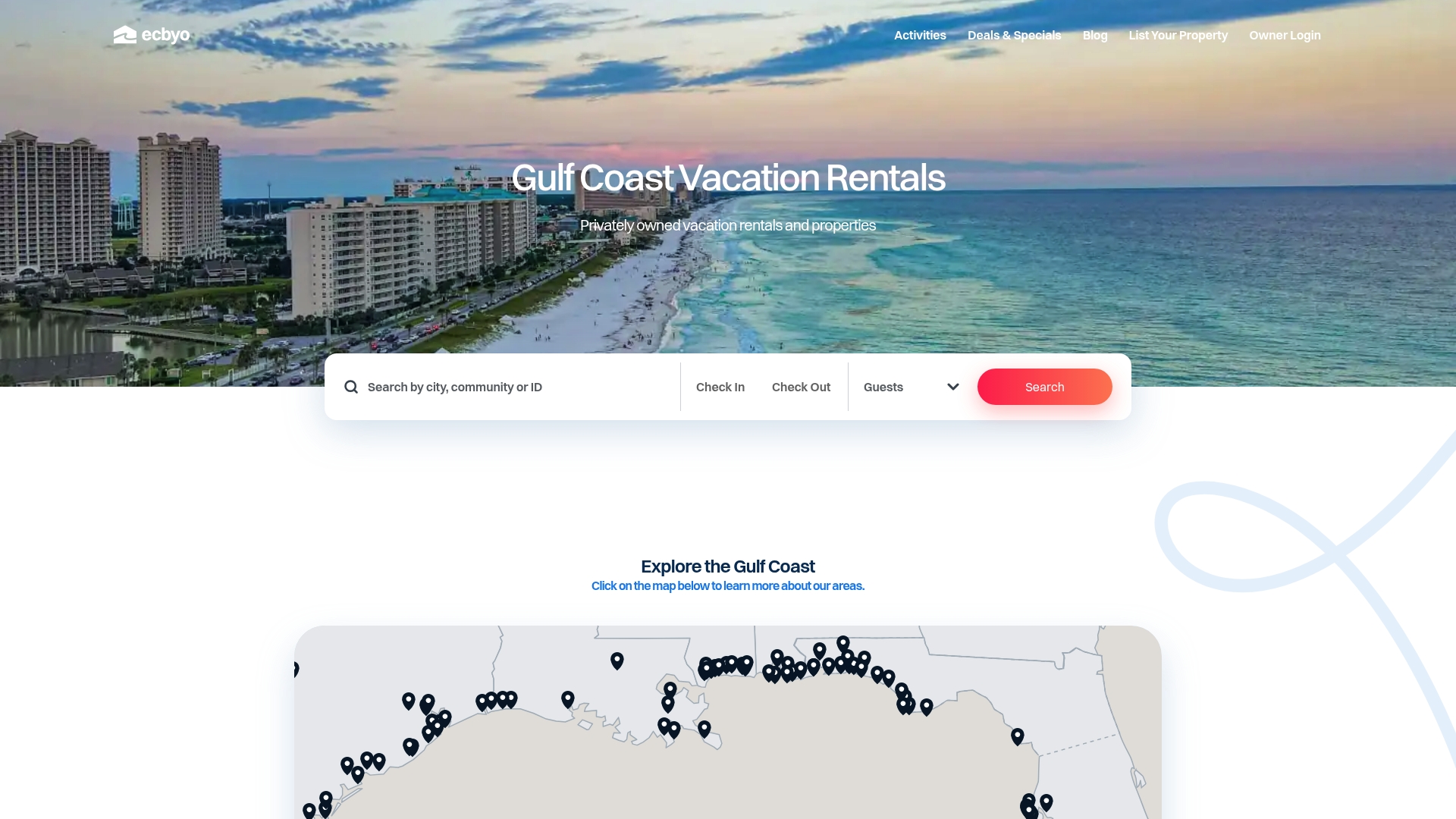
Whether you’re locking in a July week on the Florida coast or watching for a shoulder-season opening in Alabama, our Florida Vacation Rentals page and current deals are good places to start comparing dates now. Property owners looking to reach travelers directly can list through our ECBYO subscription, priced at $499 per year.
FAQ
What is the 80/20 rule in Airbnb?
A general business principle holds that a small share of listings or amenities drive most bookings and revenue for a host. It’s a general business principle rather than an official platform policy, so treat it as a rough guide rather than a fixed rule.
What is the cheapest day of the week to book an Airbnb?
There’s no single confirmed cheapest day for booking short-term rentals specifically, since pricing depends more on demand for your travel dates than the day you book. For flights, booking on a Sunday saved about 6% compared to a Friday booking, based on domestic airfare data.
What is the cheapest day of the week to book vacations?
For flights tied to vacation travel, Sunday bookings showed roughly a 6% savings over Friday bookings, and August came up as a comparatively cheaper month to fly for summer trips. Lodging pricing doesn’t follow the same weekly pattern, since it’s driven more by how far out you book relative to the season.
Do Airbnbs get cheaper last minute?
Rarely for desirable weeks. Dynamic pricing tools used by hosts and managers mean deep discounts mostly show up on narrow gap nights or in shoulder season, not as a rule for last-minute full-week bookings during peak summer.
Are more Americans still planning summer beach trips despite rising costs?
Yes. A July 2026 survey found that 56% of Americans still plan a summer trip despite higher costs, with many choosing closer-to-home or better-value options rather than canceling plans entirely.
Sources
- When to Book a Beach Vacation | SHORE NEWS NOW
- New Report Shows Americans Are Reimagining Summer Travel, Not Canceling It | AHLA
- U.S. Travel - Travel recovery insights dashboard
Recommended
- Types of Gulf Coast Beach Rentals: Your 2026 Guide
- Compare Gulf Coast Beach Towns
- Gulf Coast Vacation Guide | Beaches, Rentals & Insider Tips

About the Author
Joe Godar of the Emerald Coast by Owner Editorial Team creates destination guides, vacation-planning resources, and local travel content focused exclusively on Gulf Coast vacation rentals.
Our team researches beach communities, vacation rental trends, family travel planning, local attractions, and direct-booking best practices across Florida, Alabama, Mississippi, Louisiana, and Texas. Every guide is written to help travelers make more informed booking decisions while avoiding unnecessary third-party guest service fees.
Since launching in 2016, Emerald Coast by Owner has helped connect travelers directly with verified vacation rental hosts across the Gulf Coast.
This article was reviewed for accuracy and updated using local destination research and current vacation rental market insights.


