


Florida vacation rentals are legal statewide, and they are regulated at three levels. The state licenses the rental and collects sales tax. The county adds its own tourist taxes and, in many places, a local registration. Safety rules cover pools, balconies and stairways. If you are booking, you mainly need to confirm that the owner holds a state license and that the rental is registered where your destination requires it. If you are an owner, the same checklist is your start-up list. This guide covers both sides, and it is useful whether you search for vacation rentals by owner in Florida or book through any other channel. You can browse direct listings on Emerald Coast By Owner.
TL;DR
- Florida requires a license from the Department of Business and Professional Regulation (DBPR) for whole-unit rentals that are rented often or advertised as regularly rented.
- State sales tax of 6% applies to rentals of six months or less, and counties can add tourist and surtax charges on top.
- Pools, balconies and stairways have safety requirements, and some counties inspect.
- State law limits how far local governments can restrict rentals, but rules adopted on or before June 1, 2011 are an exception, so local rules differ.
- Before booking, ask for the license number and check the destination county’s rules.
Table of Contents
- How Florida defines a vacation rental
- The state license: what owners need and guests can ask for
- Taxes on Florida vacation rentals
- Safety rules that apply to rentals
- What local governments can and cannot regulate
- How to check a Florida rental before you book
- A checklist for owners who want to list in Florida
- Perspective
- Find Florida rentals direct from owners
- FAQ
- Sources
How Florida defines a vacation rental
The state treats a vacation rental as a type of public lodging. Florida defines vacation rentals as condominium or cooperative units, or individually or collectively owned single-, two- or four-family dwellings, that operate as transient public lodging but are not timeshares. A license is required when the whole unit is rented more than three times a year for periods under 30 days or one month, whichever is less, or when it is advertised or held out as regularly rented in that way.
Two practical points follow from that definition:
- Renting a single room in your own home is a different situation from renting out an entire condo or house. The definition above is about whole units.
- Advertising counts. An owner who lists a home as available for short stays can fall under the license requirement even before the third booking.
The state’s own guidance says owners must obtain a vacation rental license from the DBPR Division of Hotels and Restaurants to operate legally.
The state license: what owners need and guests can ask for
The DBPR license is the baseline for every legal short-term rental in Florida. For guests, it is the easiest thing to ask about. A legitimate owner will know their license status and can tell you the license number.
Cost and renewal
The state charges a $50 one-time application processing fee in addition to the license fee, and the license fee depends on the number of units. Licenses are renewed annually on a staggered schedule that is set by the county’s district, so two neighboring owners may renew in different months. Check the DBPR site for the current fee schedule before you apply, because amounts can change.
What the license means for you as a guest
A license does not guarantee a perfect stay, but it tells you the owner is registered with the state and is expected to meet public lodging standards. When you contact an owner directly, a simple message works well: “Is the property licensed with the Florida DBPR, and can you share the license number?” Owners who run their rentals properly answer this quickly.
Taxes on Florida vacation rentals
Rental taxes are the part of Florida law that guests see on their bill, and the part owners most often get wrong.
| Tax | Who it applies to | Source of the rule |
|---|---|---|
| State sales tax (6%) | Transient rental charges for periods of six months or less | State Department of Revenue |
| Discretionary sales surtax | Added where the county has adopted one | State Department of Revenue |
| Local option transient rental taxes | Tourist development, convention development and tourist impact taxes, set by county | State Department of Revenue |
The Florida Department of Revenue explains that the 6% state sales tax and any applicable discretionary sales surtax apply to transient rental charges for periods of six months or less. The same guide notes that counties may add local option transient rental taxes, such as tourist development, convention development and tourist impact taxes.
Rates and administration vary by county. The state’s history of local sales tax and current rates says to confirm rates and locally administered taxes with the county taxing authority. In practice, this means an owner in Okaloosa County, an owner in Bay County and an owner in Miami-Dade County may each collect a different combined rate.
For guests: the taxes appear on your quote or invoice, usually as a percentage of the rental charge. If a quote shows no taxes at all, ask whether they are added later.
For owners: register with the Department of Revenue, then contact your county tax collector or tourist development office about the local account. Do not assume the state registration covers everything.
Safety rules that apply to rentals
Safety is where the law directly affects a family’s trip. Two requirements come up most often.
Pools
Swimming pools at vacation rentals must have approved safety features, such as barriers or alarms, to protect children under age six, according to Section 515.27 of the Florida Statutes as described by Miami-Dade County. If you are traveling with toddlers, look at the listing photos for a fence or a gate with a latch, and ask about door alarms. For ideas on what pool features look like in practice, see this overview of swimming pool features at vacation homes. Our own guides to beachfront rentals with a pool and vacation rentals with private pools show what to ask owners about fencing and access.

Balconies, stairways and railings
Gulf-facing condos often have balconies several floors up. State licensing requirements say that buildings three or more stories high, or with a balcony 17 feet or more above the lowest grade, must submit a certificate stating that balconies, stairways and railways were found safe, secure and free of defects. Owners of high-rise units should have this on file as part of the license process.

What local governments can and cannot regulate
Florida is known for a state preemption law, but the details matter, and they explain why rules feel different from one beach town to the next.
According to a Florida Bar Journal article, Section 509.032(7)(b) bars local governments from prohibiting vacation rentals or regulating their duration or frequency. It does not apply to local laws adopted on or before June 1, 2011. The same article notes ongoing tension between local control and the rights of owners who want to rent their units.
In short:
- Newer local rules cannot ban rentals or set minimum-stay limits.
- Older local rules can still stand, which is why some communities have stricter limits.
- Local governments can still require registration, inspections and renewals, as the examples below show.
- Condo and homeowner associations are separate. Their governing documents can restrict rentals independently of city and county rules. Our checklist on HOA vacation rental rules covers the five checks to make.
Local examples
| Area | What the county requires | Source |
|---|---|---|
| Miami-Dade County | A Certificate of Use before a property is listed, renewed annually, with an inspection scheduled upon application | Miami-Dade County |
| Bay County (includes Panama City Beach) | Annual renewal of a short-term vacation rental certificate, with interior inspections allowed at the county’s discretion | Bay County ordinance, 2023 |
These two examples show the pattern. Other counties and cities have their own registration and inspection rules, so look at your destination’s county or city website before you book or list.
How to check a Florida rental before you book
You do not need legal training to book with confidence. A short routine covers most of the risk.
- Ask for the state license number. It should belong to the owner or the manager running the property.
- Ask about local registration. In Miami-Dade, a Certificate of Use is required before listing. In Bay County, a certificate is renewed annually. Other places have their own versions.
- Confirm the taxes. Ask what tax rate is added to the quote and whether it is included.
- Check the safety basics. For homes with pools, ask about barriers and alarms. For upper-floor condos, ask whether the building has its balcony and railing certificate.
- Read the rental agreement. Cancellation, occupancy and house rules should be in writing. Our guide to a Gulf Coast rental agreement explains what a clear one includes.
- Verify the owner. Our article on two documents to verify a vacation rental owner helps you spot a listing that is not what it seems.
When you book direct, you can ask these questions in a message and get the answers before you pay a deposit.
A checklist for owners who want to list in Florida
Owners can use this list to stay in good standing.
| Step | What to do |
|---|---|
| 1 | Confirm whether your property counts as a vacation rental under the state definition |
| 2 | Apply for the DBPR license and pay the $50 application fee plus the unit-based license fee |
| 3 | Register with the Department of Revenue for sales tax |
| 4 | Set up local tourist tax accounts with your county |
| 5 | Check your city or county for a registration, Certificate of Use or inspection requirement |
| 6 | Review your HOA or condo association rules |
| 7 | Put pool safety features and, if needed, the balcony certificate in order |
| 8 | Write clear house rules and a rental agreement |
| 9 | Calendar your annual license renewal |
An owner who works through this list can advertise with confidence, and guests who ask for license details tend to trust a listing that answers them without delay.
Perspective
We built Emerald Coast By Owner in November 2016 so guests could book Gulf Coast vacation rentals directly from property owners, without unnecessary traveler fees. After years of watching how guests and owners talk to each other, we think the best protection in a market with local rules is a direct conversation.
When you can message the owner, you can ask for the license number, ask about the pool fence, and ask what taxes will be added. You see an owner profile and a detailed listing, not just a photo and a price. That is why we focus on direct contact between guests and owners, and why we do not add traveler service fees.
For owners, we believe that clear paperwork is good marketing. A listing that mentions its license, its safety features and its house rules attracts guests who want a trouble-free stay. Our focus on the Gulf Coast means those guests are searching for exactly the kind of homes and condos our owners offer.
Joe
Find Florida rentals direct from owners
If you are planning a trip, our Florida vacation rentals page lets you search homes, condos, villas and cottages by location on a map, view owner profiles and contact owners directly, with no traveler service fees. Our guides to Florida vacation rentals by owner and Florida Panhandle rentals can help you narrow your choices.
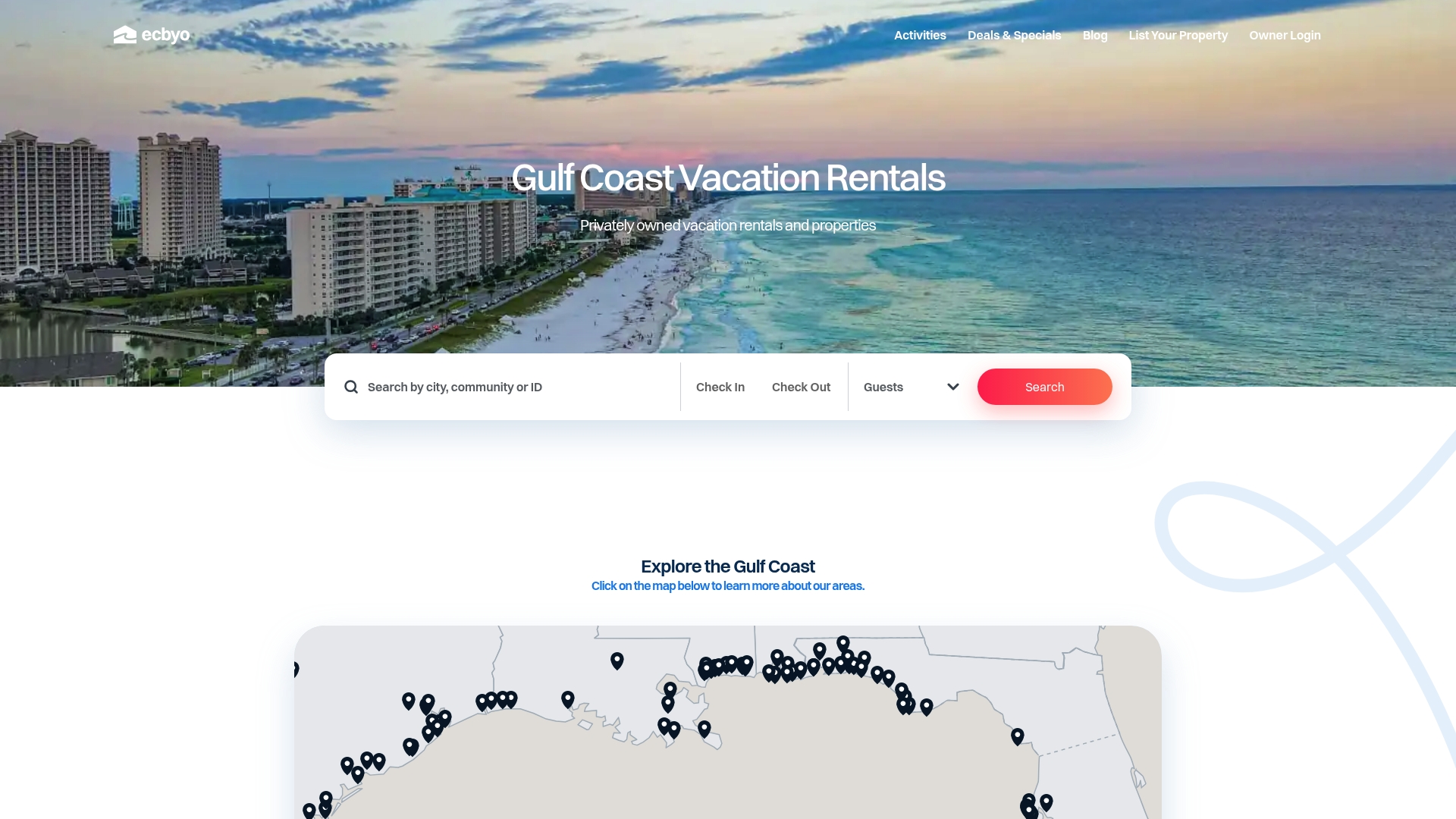
Owners can list a property with an ECBYO subscription at 499 USD per year. See the details on our list your property page.
FAQ
Do I need a license to rent my Florida home to vacationers?
Usually yes, if you rent the whole unit more than three times a year for periods under 30 days or one month, whichever is less, or advertise it as regularly rented that way. The license comes from the DBPR Division of Hotels and Restaurants. Check the DBPR website for the current requirements before you list.
How much is a Florida vacation rental license?
The state charges a $50 one-time application processing fee plus a license fee based on the number of units. The DBPR publishes the current fee schedule, so confirm the total there before you apply. Licenses are renewed every year.
Can a Florida city ban vacation rentals?
Under Section 509.032(7)(b), local governments cannot prohibit vacation rentals or regulate their duration or frequency. That protection does not cover local laws adopted on or before June 1, 2011. Cities and counties can still require registration and inspections.
What taxes will I pay as a guest?
Florida’s 6% state sales tax applies to rentals of six months or less. Your county may add a discretionary sales surtax and local tourist taxes. The total depends on the county, so ask the owner for the exact rate before you pay.
Sources
- Hotels and Restaurants: Licensing
- Guide to Vacation Rentals and Timeshare Projects
- When Is a License Required (DBPR, January 2022)
- Sales and Use Tax on Rental of Living or Sleeping Accommodations (Florida Department of Revenue)
- History of Local Sales Tax and Current Rates (Florida Department of Revenue)
- Short-Term Vacation Rentals (Miami-Dade County)
- DBPR Licensing Portal: Checklist Details
- Florida Community Associations Versus Airbnb and VRBO in Florida (The Florida Bar Journal)
Recommended
- Avoid Fines and Booking Suspensions: Gulf Coast Rental Agreement
- HOA Vacation Rental Rules: 5 Checks Gulf Coast Hosts Need
- Vacation Rental House Rules: What to Include and a Template
- 2 Documents to Verify Vacation Rentals for Gulf Coast Owners

About the Author
Joe Godar of the Emerald Coast by Owner Editorial Team creates destination guides, vacation-planning resources, and local travel content focused exclusively on Gulf Coast vacation rentals.
Our team researches beach communities, vacation rental trends, family travel planning, local attractions, and direct-booking best practices across Florida, Alabama, Mississippi, Louisiana, and Texas. Every guide is written to help travelers make more informed booking decisions while avoiding unnecessary third-party guest service fees.
Since launching in 2016, Emerald Coast by Owner has helped connect travelers directly with verified vacation rental hosts across the Gulf Coast.
This article was reviewed for accuracy and updated using local destination research and current vacation rental market insights.


