


Vacation rental platforms commonly add guest service fees at checkout, often calculated as a percentage of the booking subtotal, and in many cases these fees can be avoided or reduced. The FTC’s rule on total-price disclosure now requires clearer upfront pricing, and marketplaces like Emerald Coast By Owner offer a fee-free path for travelers who book directly with Gulf Coast property owners. Below, we break down how these fees are calculated, what they fund, and what you can do about them.
TL;DR:
- Guest service fees commonly range from 6% to 20% of the rental subtotal, with many bookings near 14% to 16%; cleaning fees are often excluded.
- On a four night, $600 stay, a 15% fee adds $90; applying 7% tax to the $790 subtotal brings checkout total to $845.30.
- Since May 12, 2025, sellers must include known mandatory lodging fees in advertised total prices, but the FTC rule neither caps nor bans those charges.
- For direct bookings, get the rental agreement, cancellation terms, and payment instructions in writing, then pay with a traceable method such as a credit card.
Table of Contents
- What a vacation rental service fee actually is
- Why booking platforms charge service fees in the first place
- Typical fee ranges and how platforms calculate them
- How service fees change your total: a worked example
- How to avoid or reduce platform service fees
- How Emerald Coast By Owner works as a fee-free option
- What the FTC rule on hidden fees means for your next booking
- Book your next Gulf Coast stay without the extra fee
- FAQ
- Sources
What a vacation rental service fee actually is
A vacation rental service fee, sometimes labeled a guest fee or booking fee, is a charge that online platforms add to your reservation on top of the nightly rate the owner sets. It is separate from the cleaning fee or any charge the property owner collects, and it goes entirely to the platform that hosts the listing, not to the host.
This distinction matters because the advertised nightly rate rarely reflects what you will actually pay. Many platforms display an attractive per-night price in search results, then add the service fee, cleaning costs, and taxes only once you reach checkout. That gap between the browsing price and the final price is exactly what newer disclosure rules aim to close.
Before booking any listing, it helps to scan the price breakdown for these line items:
- The exact label used for the fee (service fee, guest fee, booking fee, or traveler fee)
- Whether the fee is a flat amount or a percentage of the subtotal
- Whether taxes are calculated before or after the fee is added
- Whether any portion of the fee is refundable if you cancel
Reading this breakdown carefully, rather than trusting the headline nightly rate, is the first step toward understanding your real cost.
Same house, same week, save $1,483.95 on ECBYO!
Why booking platforms charge service fees in the first place
Platforms justify guest service fees as the cost of running a marketplace that connects millions of travelers with individual property owners. The fee typically funds several operational layers rather than a single expense.
Marketing is a major driver. Platforms spend heavily on advertising and search visibility to bring traffic to listings that an individual owner could never generate alone. Customer service and dispute resolution are another piece: when a booking goes wrong, the platform’s support team and host guarantee programs step in, and that infrastructure costs money to maintain.
Payment processing and fraud prevention add another layer, since platforms handle credit card transactions, verify identities, and absorb some chargeback risk. Many also bundle basic damage protection or insurance coverage into the fee. Finally, a share goes toward the technology itself: hosting thousands of listings, maintaining search and filtering tools, and moderating reviews and photos.
- Marketing and visibility that drive traffic to individual listings
- Customer support, dispute resolution, and host guarantee programs
- Payment processing, identity verification, and fraud prevention
- Platform maintenance, review moderation, and the booking technology itself
Pro Tip: Before assuming a fee is pure profit, check what protections or support the platform actually offers. If a listing comes with built-in damage protection or 24/7 support, part of that fee is buying real coverage, not just a markup.
Typical fee ranges and how platforms calculate them
The fee percentage can shift based on the total booking value, the property type, and even the length of stay.
Most platforms use one of two calculation models. The first applies a straight percentage to the rental subtotal before taxes. The second splits the fee between the host and the guest, where the host absorbs part of the cost and the guest sees a smaller add-on at checkout. A smaller number of platforms use flat fees regardless of booking size.
A representative guest-fee range reported across travel-industry explainers runs from about 6% to 20% of the subtotal, with many bookings landing closer to 14% to 16%. Knowing where a platform typically falls in that range helps you estimate your final cost before you start comparing listings.
One detail trips up a lot of travelers: the cleaning fee is often excluded from the base used to calculate the percentage, while the nightly rate usually is not. That means two listings with identical nightly rates and cleaning fees can still produce different service fee totals depending on how each platform defines its calculation base.
- Percentage-of-subtotal models apply a flat rate to the nightly total
- Split-fee models divide the cost between host and guest
- Cleaning fees are frequently excluded from the fee calculation base
- Taxes are typically calculated after the service fee is added, not before
How service fees change your total: a worked example
Percentages are easy to skim past, but they add up fast once you see them applied to a real booking.
| Line item | Amount |
|---|---|
| Nightly rate (4 nights x $150) | $600 |
| Cleaning fee | $100 |
| Service fee (15% of $600) | $90 |
| Subtotal before tax | $790 |
| Tax (7% of $790) | $55.30 |
| Total due at checkout | $845.30 |
In this illustrative example, the service fee alone adds $90 to the booking, and the compounding effect of tax on top of the fee pushes the real total well past the advertised nightly rate. Multiply that gap across a week-long trip or a family group booking two units, and the difference becomes significant.
Before you click pay on any listing, run through this short checklist:
- Confirm the exact label and percentage of the service fee shown at checkout.
- Check whether taxes apply to the subtotal, the service fee, or both.
- Look for a refundable security deposit versus a non-refundable fee.
- Review the cancellation policy before you commit, since fees are rarely refunded even when the nightly rate is.
Running the math yourself, rather than trusting the number on the final screen, is the only reliable way to compare two properties fairly.
How to avoid or reduce platform service fees
The most direct way to skip a guest service fee is to book straight from the property owner or manager rather than through a fee-charging platform. Many owners list the same property on multiple channels, including their own website or a fee-free marketplace, so a quick search for the property name or address can reveal a direct-booking option.

Fee-free owner marketplaces are another route. These sites connect travelers directly with owners and skip the guest-side service fee entirely, since the business model charges the property owner for the listing rather than charging the guest at checkout. Our own guide on avoiding Vrbo fees walks through the direct-booking process step by step for travelers who want a deeper look.
A few other tactics can shave costs even when you stay on a fee-charging platform:
- Ask about multi-week or monthly discounts, since many owners negotiate directly for longer stays.
- Search during shoulder season, when nightly rates and demand-based fees both tend to drop.
- Watch for platform promotions or coupon codes that offset part of the service fee.
- Compare the same property across multiple listing sites before booking, since fee structures differ.
Pro Tip: When you book direct, always get the rental agreement, cancellation policy, and payment instructions in writing before sending any money, and use a traceable payment method like a credit card rather than a wire transfer or gift card.
If you are weighing timing strategies on top of fee avoidance, booking tactics for weekend stays from a hospitality partner site offer a few extra angles on finding value outside peak periods.
How Emerald Coast By Owner works as a fee-free option
Our marketplace has grown from an initial number of listings into a community featuring many vacation rentals across the Gulf Coast. We built the platform around one core idea: guests should be able to book directly from property owners without paying additional traveler fees.
That structure changes who pays for what. Rather than charging guests a percentage at checkout, we charge property owners a listing fee to advertise on the marketplace, which means the traveler-facing price you see is the price the owner actually wants to receive.
- No guest service fee added at checkout, regardless of booking size
- Direct communication with the property owner before and during your stay
- Map-based search across rentals in multiple Gulf Coast states
- Owner profiles and detailed listings so you know who you are booking with
Our blog also covers how recent FTC guidance affects Gulf Coast listing fees for owners who want to stay compliant with total-price disclosure.
What the FTC rule on hidden fees means for your next booking
The FTC’s Rule on Unfair or Deceptive Fees requires short-term lodging sellers to disclose the true total price up front, including most mandatory fees, rather than revealing them only at checkout. It does not cap or ban service fees; it simply forces platforms to show the real number earlier.
- Mandatory fees a seller knows about in advance must appear in the advertised total price
- Optional charges, like travel insurance, can still be presented separately
- The FTC’s consumer alert frames the goal as ending bait-and-switch pricing in advertised rates
If a listing’s advertised price still jumps substantially once you reach the final screen, that is worth treating as a signal to double-check the breakdown before you pay.
Book your next Gulf Coast stay without the extra fee
We built our marketplace so the price you see when you search is closer to the price you actually pay.
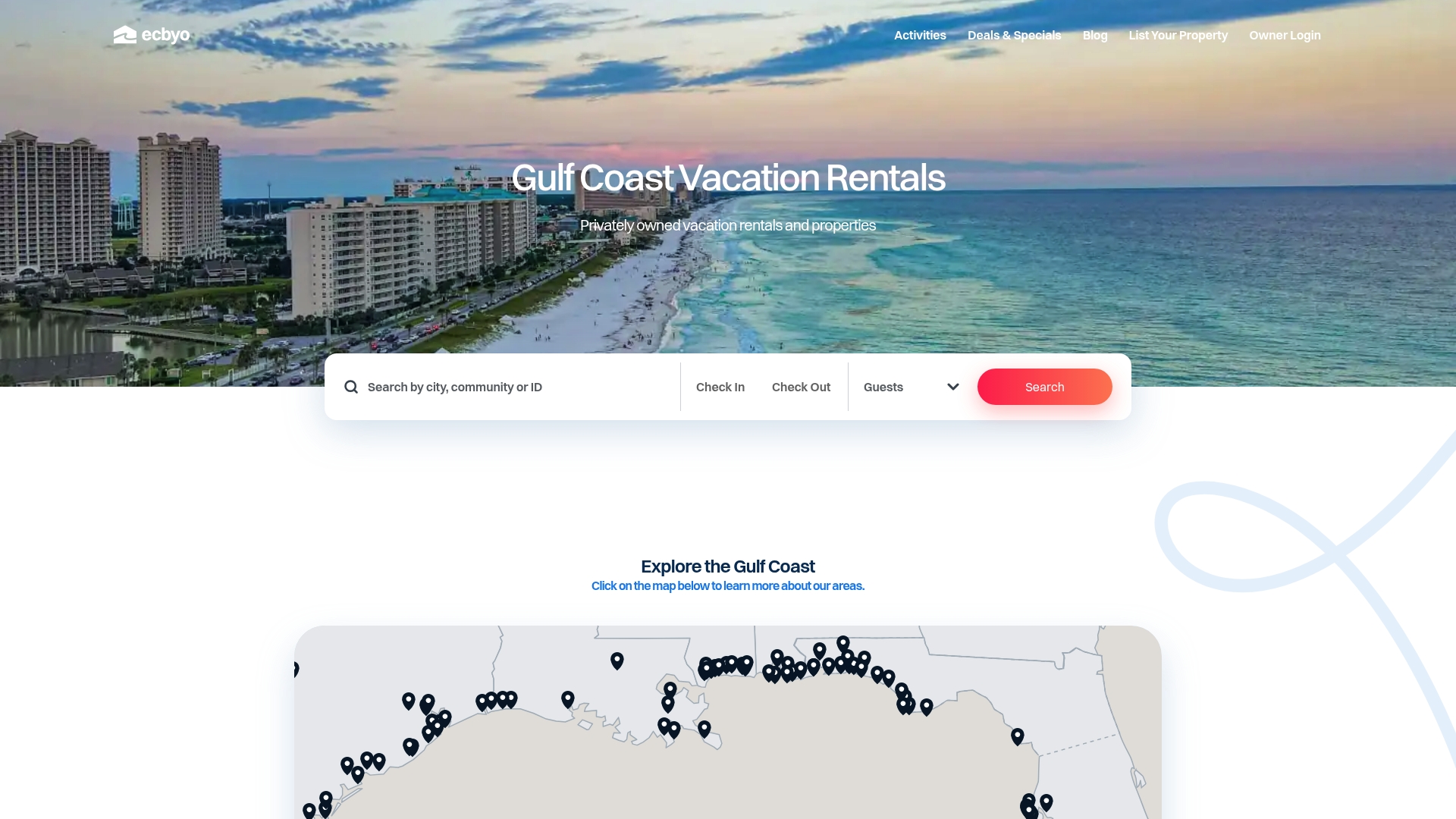
Browse Gulf Coast vacation rentals directly from owners, or head straight to our Florida vacation rentals page if the Gulf side of the Sunshine State is your destination. Either way, you will be talking to the person who actually owns the property, not a support queue.
FAQ
How to avoid Vrbo service fee for vacation rentals?
The most reliable way is to find the same property listed directly through the owner’s own site or a fee-free owner marketplace, since those channels skip the guest-side service fee entirely. Searching the property address or name online often surfaces a direct-booking option, and our guide on avoiding Vrbo fees covers the safe way to verify an owner before paying.
What is the average vacation rental management fee?
Vacation rental management fees, which owners pay to companies that handle bookings and maintenance, are a separate cost from guest service fees and are not publicly standardized across the industry. Guest-facing service fees, by contrast, are commonly cited in the range of 6% to 20% of the subtotal, depending on the platform.
What is the 75-55 rule in Airbnb?
There is no officially documented “75-55 rule” published by Airbnb or a named regulatory source, so definitions you may see circulating online are not verified. What is confirmed is that the FTC’s disclosure rule requires platforms to show total price, including mandatory fees, before checkout.
How to avoid paying the Airbnb service fee?
Booking directly through a property owner’s website or a fee-free marketplace is the main way to skip the guest service fee, since that fee only applies when a booking runs through the platform’s own checkout. Always confirm the cancellation policy and use a traceable payment method before sending money for a direct booking.
Sources
- FTC Rule on Unfair or Deceptive Fees to Take Effect on May 12, 2025 | Federal Trade Commission
- What the Rule on Unfair or Deceptive Fees means for you | Consumer Advice
Recommended
- Southwest Florida Vacation Rentals: Book Direct, Save on Fees
- FTC Rule Forces Total Price: Gulf Coast Vacation Rental Listing Fees
- Save 12–18% When You Book Direct Gulf Coast Rentals Safely
- Verify Ownership: Book Gulf Coast Owner Managed Rentals Direct No Fees

About the Author
Tayler Jaeger of the Emerald Coast by Owner Editorial Team creates destination guides, vacation-planning resources, and local travel content focused exclusively on Gulf Coast vacation rentals.
Our team researches beach communities, vacation rental trends, family travel planning, local attractions, and direct-booking best practices across Florida, Alabama, Mississippi, Louisiana, and Texas. Every guide is written to help travelers make more informed booking decisions while avoiding unnecessary third-party guest service fees.
Since launching in 2016, Emerald Coast by Owner has helped connect travelers directly with verified vacation rental hosts across the Gulf Coast.
This article was reviewed for accuracy and updated using local destination research and current vacation rental market insights.


